Questions parents ask
Swim lesson questions from Outer Banks parents, answered.
What ISR lessons are, who they suit, how long they take and what it costs. Where a detail is not published, it is because Sarah confirms it directly rather than this site guessing on her behalf.
What ages does Little Fins OBX teach?
Children from 6 months to 6 years old. ISR instruction is designed around those ages, and the skills are matched to what a child can physically do at that size and stage.
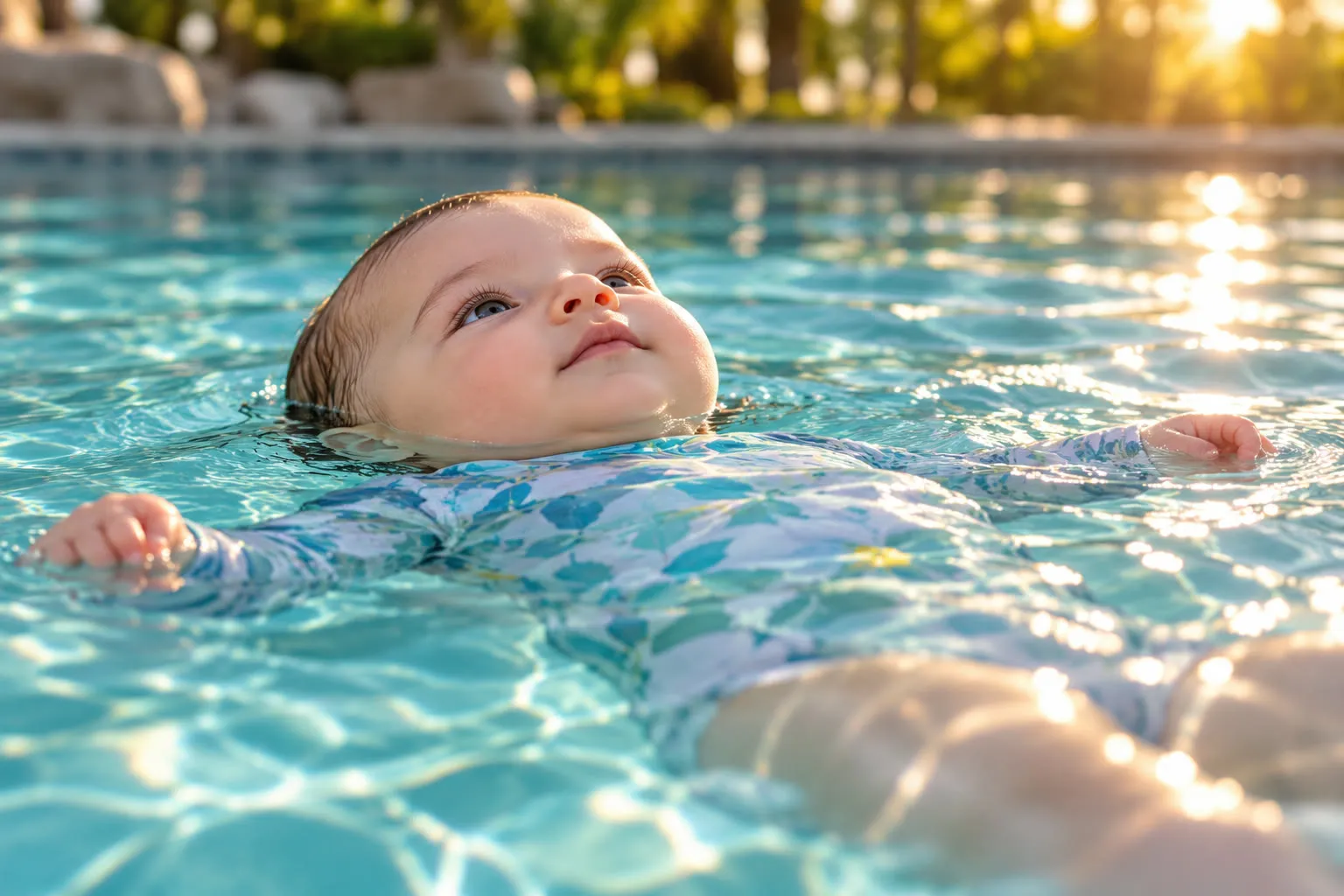
Can a baby that young really learn to float?
That is exactly what ISR instruction teaches a baby of 6 to 12 months: to roll onto their back from a face-down position, float, rest and breathe until someone reaches them. The skill is built gradually across many short lessons, one child at a time.
How long does a session take?
ISR program documentation puts an average session at about six weeks, at five lessons a week. Every child is different, so treat six weeks as the typical pattern rather than a guarantee. Sarah will tell you how your child is progressing as they go.
How long is each lesson, and how often do we come?
Ten minutes a day, five days a week, Monday to Friday. Short and frequent is deliberate: for a child this age, ten focused minutes with one instructor teaches more than a long weekly class.
Are lessons one-on-one or in a group?
One-on-one, always. One child, one instructor, for the whole ten minutes. That is how ISR lessons are taught and how Little Fins OBX teaches them.
What does a child actually learn?
Babies from 6 to 12 months learn to roll onto their back to float, rest and breathe. Children from 1 to 6 years learn the swim-float-swim sequence: swim with their face in the water, roll to a float to breathe, then turn back over and swim again, repeating it until they reach the wall, the steps or the shoreline.
Will my child cry?
Some children are unsure about the water at first, and Sarah will talk with you about what she is seeing in your child. Ten-minute lessons are partly about that: if a first day is hard, it is a short one, and there is another one tomorrow.
Why do children practise in clothes?
Because most real-world falls into water happen fully clothed. Once a child is ready, they practise in clothes so that the day it matters, the water and the weight of their clothes are not a surprise. ISR program documentation describes clothes practice as part of the sequence.
Do you offer refresher lessons?
Yes. Returning students come back for refresher lessons, which ISR documentation describes as typically a two-week session, to rebuild the float and the swim-float-swim sequence as the child grows.
Where do the lessons take place?
The lesson pool is on the Outer Banks, and Sarah confirms the exact location by email when she offers you a place. It is not published on this site, because it is a private pool rather than a public facility.
How much do lessons cost, and how do I pay?
Pricing is not published here. Sarah confirms the current session cost and how payment works when she replies to your lesson request, so you have it in writing before you commit to anything.
How do I get started?
Send a lesson request with your first name, last name and email address. Sarah replies by email with current availability, the ages she can take in the next session, and what the first day looks like.
Still unsure about something that is not here? Ask it in your lesson request and Sarah will answer it directly. For the longer version of a few of these answers, start with how ISR swim lessons work, the swim lesson guides, or Sarah's ISR certification.
Lesson requests
Ask the question you actually have
Whether it is about a specific age, a nervous toddler, or a session already underway, send it over. Sarah would rather answer it now than have you guess.