The program
Swimming classes that teach a child to self-rescue.
What your child learns, how often they come, how long it usually takes, and what happens after the first session. Little Fins OBX teaches the ISR Self-Rescue® method to children 6 months to 6 years on the Outer Banks.
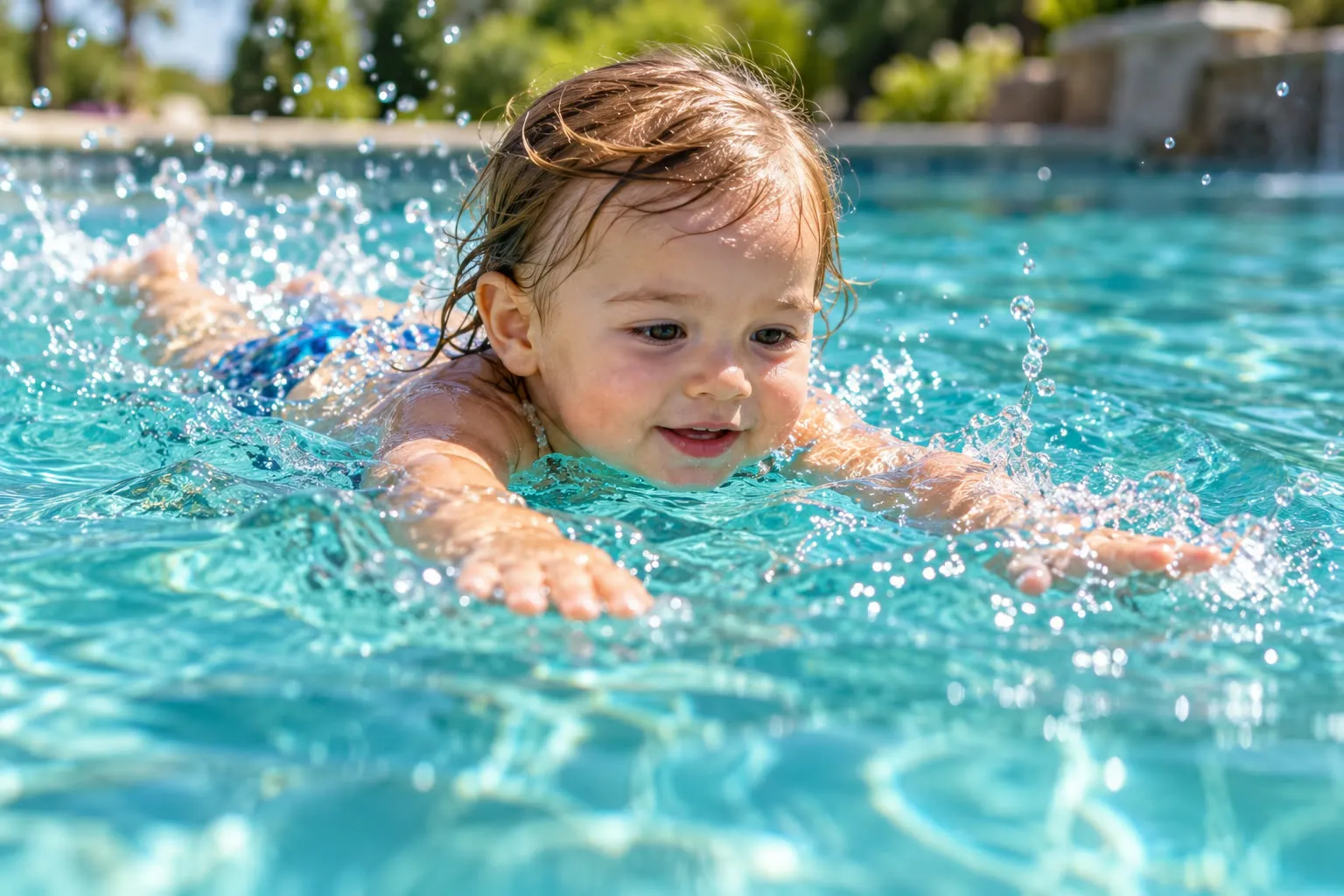
Who lessons are for
Two age groups, two skill sets.
ISR instruction is built around what a child can physically do at their age, so the work looks different at 8 months than it does at 4 years. Both groups start from the same place: being able to breathe while floating.
A swimming class usually means a group with a teacher at the front, and a swim school usually means a building with a schedule. What happens here is one instructor and one child for ten minutes at a time, which is how the ISR method is taught.
6 to 12 months
Roll over and float
- Roll onto their back from a face-down position
- Float, rest and breathe on their back
- Hold that float until someone reaches them
Skills for this age group follow ISR program documentation.
1 to 6 years
Swim, float, swim
- Swim with their face in the water, then roll to a float
- Rest, breathe, then turn back over and swim again
- Repeat that sequence until they reach the wall, the steps or the shoreline
Skills for this age group follow ISR program documentation.
Age by age
What a session looks like at each age.
The two skill sets above split at a year old. The four bands below are how the same program plays out for a baby of 6 months, a toddler of 2 and a child of 5, which is what most parents are really trying to picture when they read about ISR.
6 to 12 months
Rolling to a float, before they can walk
A baby from 6 to 12 months learns the rollback-to-float: rolling from a face-down position onto their back, floating, resting and breathing, and holding that float until an adult reaches them. It is the same ten minutes a day, five days a week, and at this age it is the whole of the work.
If you have been searching for newborn swimming lessons, this is the age band your child joins, and six months is also where ISR draws its starting line. That is the youngest age the method is written for, so a newborn of a few weeks or months is not a student yet. For a baby younger than that the useful work is the layers around the water: a fence, a self-latching gate, an alarm, and never a baby alone near water, a shallow bath included.
1 to 2 years
Swim, float, swim, on a body that has just learned to walk
At 12 months the program changes. A child from 1 to 6 years learns swim-float-swim: swimming with their face in the water, rolling onto their back to float and breathe, then turning back over and swimming again until they reach the wall, the steps or the shoreline.
The reason is mobility. A walking child who falls into water is not where they fell, they move. So the lessons stop being only about holding a float and start being about travelling to a safe place, which is the skill a one-year-old who can open a door needs most.
2 to 3 years
Starting at two, or coming back at two
Children arrive at this age from both directions. Some learned the rollback-to-float as a baby and are rebuilding the sequence on a taller, heavier body. Others meet ISR for the first time at two, or at three.
Either way the lesson is the same ten minutes, one-on-one, five days a week, and the child is taught the version of the skill their body can do today. ISR describes a typical session as four to six weeks, and progress is checked skill by skill rather than against a date.
3 to 6 years
The first lesson can be at four or five
The 6-month line is a starting point, not a deadline, and a child of four or five can begin with no swimming behind them at all. That child learns the swim-float-swim sequence the same way the toddlers do, matched to what they can already do in water.
A child at this end of the range can also come back for a refresher, because the skills were built on a body that keeps changing shape. Six years old is the far end of the ages Little Fins OBX teaches.
Little Fins OBX teaches children from 6 months to 6 years, so swimming classes for adults are not part of what Sarah offers. If your child is under 6 months, send a lesson request anyway and she will tell you when they are old enough to start.
Choosing
What to look for in swim instruction near you.
The same questions work on any program, including this one.
If you are searching for swimming classes near me, the results tend to look alike, and the differences that matter for a child of this age are narrower than the pictures suggest. They come down to four questions you can put to any swim school or instructor, this one included.
What happens in the first minute if my child goes into water alone? A survival program answers that with a specific skill, such as rolling onto their back to float. How many children share one instructor? Here it is one child, for the whole ten minutes. How is progress checked? At Little Fins OBX it is checked skill by skill, not against a calendar. And is the person teaching certified in the method they are teaching, rather than in swimming generally? Sarah is a Certified ISR Instructor.
One more question is worth asking: what happens if a session runs longer than expected? An honest answer starts with the typical range and then talks about the child, because children do not move at the same speed. If a program promises a finished swimmer on a set date, keep asking questions.
The one thing this site will not do is pretend to be a facility you can visit. Lessons are taught in a private pool, so there is no public address to put on a map, and Sarah confirms the pool and the meeting point to you directly when she offers a place. Families come from across the Outer Banks, from Duck down to Manteo, so ask her which session suits your week.
Compare swim lessons and ISR, or read the swim lesson questions parents ask most.
How the lessons run
Short, frequent, one-on-one.
A lesson is ten minutes. Your child comes five days a week, Monday to Friday. ISR program documentation puts an average session at about six weeks, and that is the pattern Little Fins OBX teaches to.
Ten minutes is not a compromise on quality. For a child this age, it is the length that keeps attention on the skill instead of on being tired.
- Monday to Friday
- 5 days/week
- Per lesson
- 10 min
- Instructor to child
- 1-on-1
- Average session
- ~6 weeks
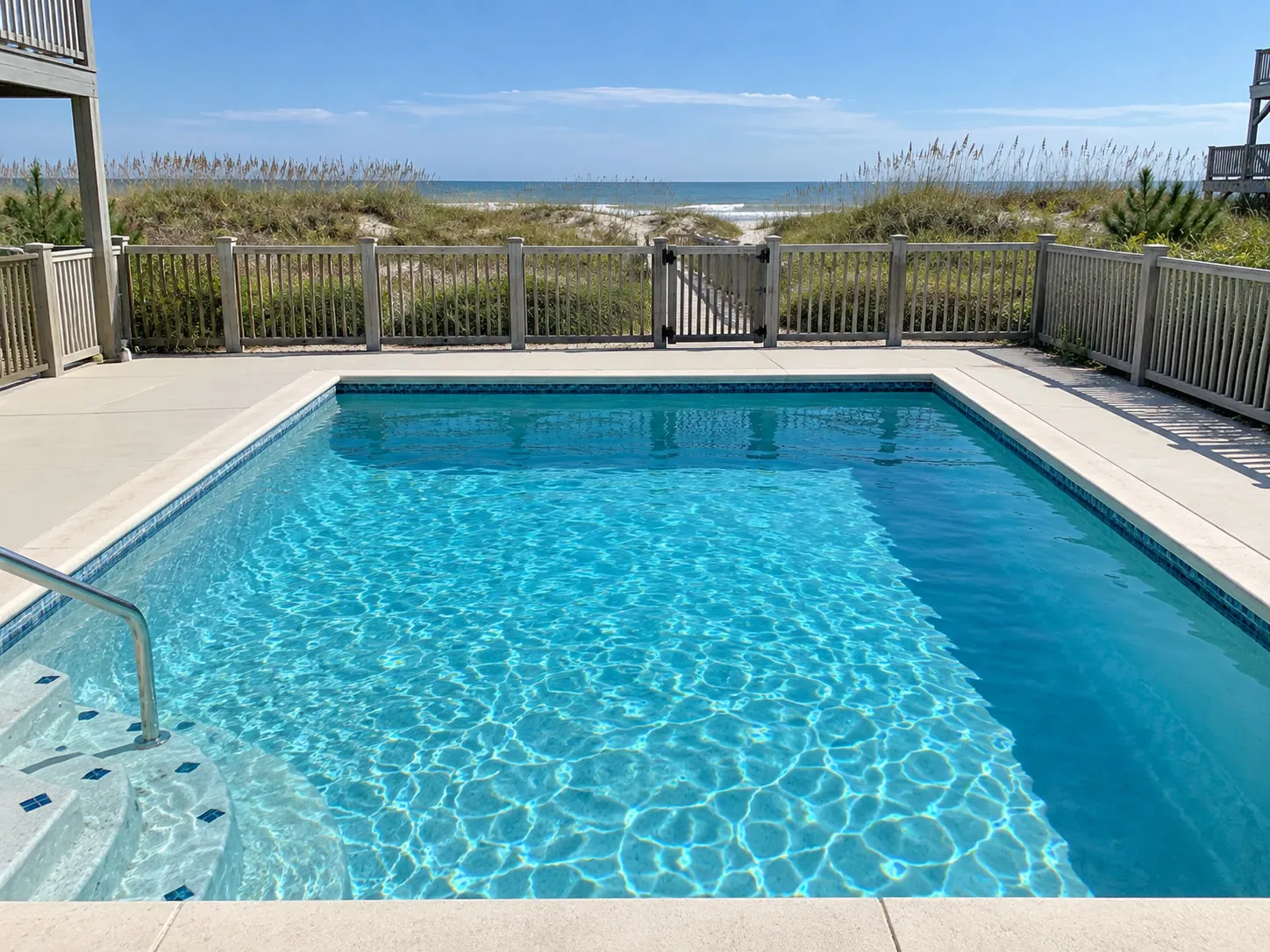
Most children on the Outer Banks are never far from water: a backyard pool, a canal at the end of the street, the sound, the ocean. Lessons are about the water a child actually meets, not a lap pool.
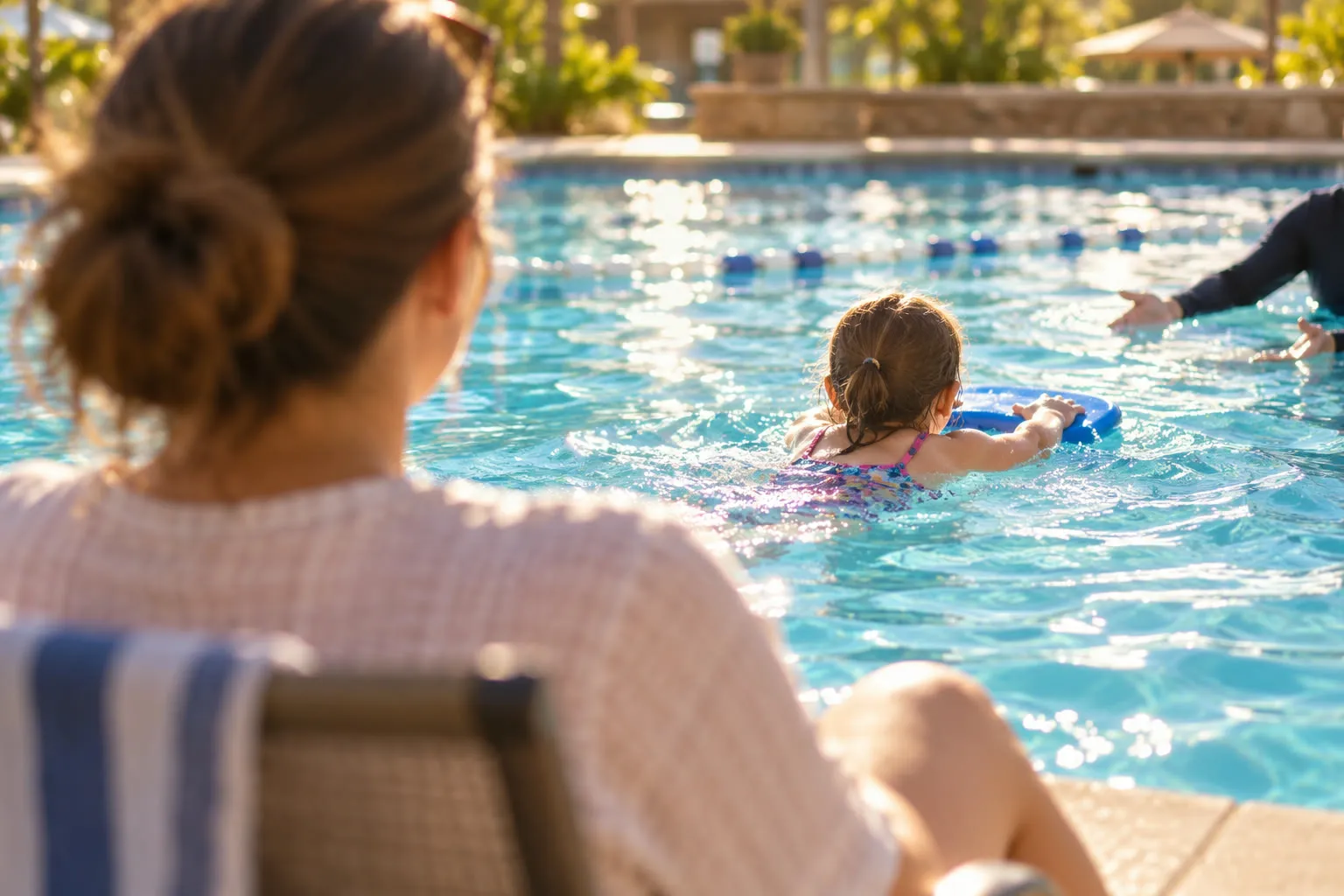
Practice that matches real life
Once they are ready, they practise in clothes.
Most real-world falls into water happen fully clothed, so ISR students practise in clothes once their skills are ready for it. It is a small change that makes the water feel much less strange if it ever happens for real.
Parents stay close and watch. Nothing about a lesson is hidden from you, and you will know exactly which skill your child is working on.
Coming back
Refresher lessons keep the skill alive.
A physical skill fades without practice, and children grow. Returning students come back for refresher lessons, typically a two-week session, to rebuild the float and the swim-float-swim sequence on a bigger, stronger body.
Refreshers are usually recommended before the summer season, when the water a child is around changes. ISR documentation describes the typical refresher as a two-week session.
What Sarah will confirm with you
These details are not published on this site, because they change and because Sarah would rather tell you directly.
- Which pool the lessons run at, and how to find it
- Current availability and the next start dates
- What a session costs and how it is paid
- What to bring on the first day
Lesson requests
Ask about the next start date
Every session has a small number of places, because each child gets one instructor for the whole ten minutes. Send a request and Sarah will tell you what is open.